Categories
New Blog
Blog
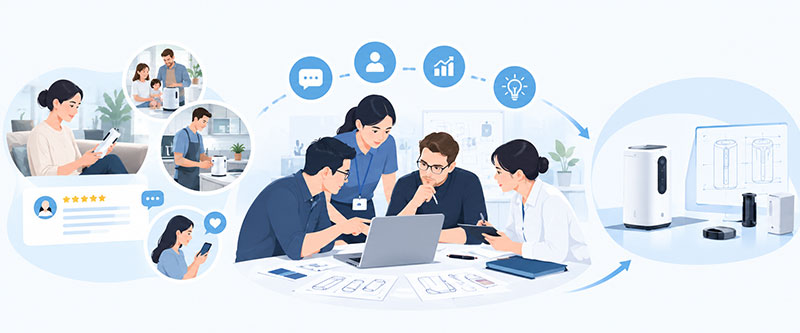
For a custom product to be developed as intended and successfully brought to market, user needs analysis is an important step before development begins. Brands and buyers responsible for defining product requirements often conduct extensive market research to organize and summarize these needs. This research may include user interviews, surveys, focus groups, and market data analysis. However, if ...

How to Define Clear Requirements for Successful Product Development The development of a new product often carries high expectations for a company entering a new market or proving a new concept. As market competition accelerates, launch windows are shrinking. Bringing a product efficiently from concept to mass production—while securing early-mover advantage—has become critical. Yet in practice, ma...

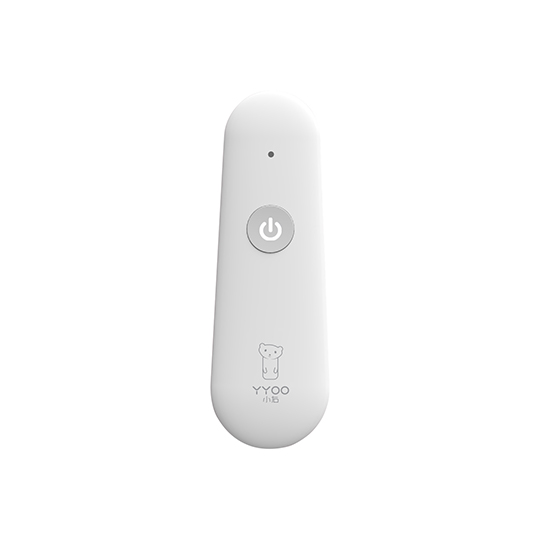
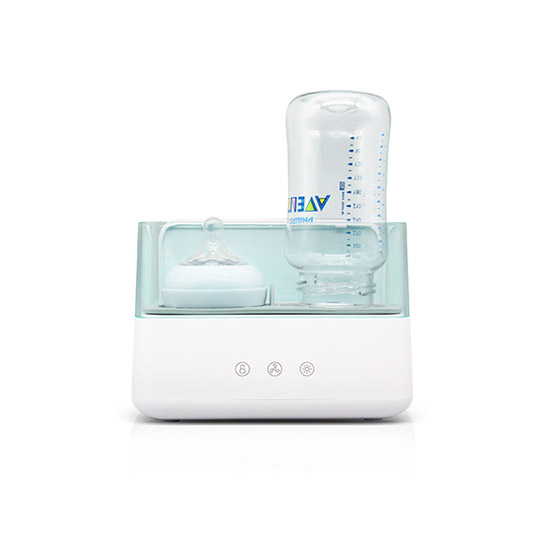
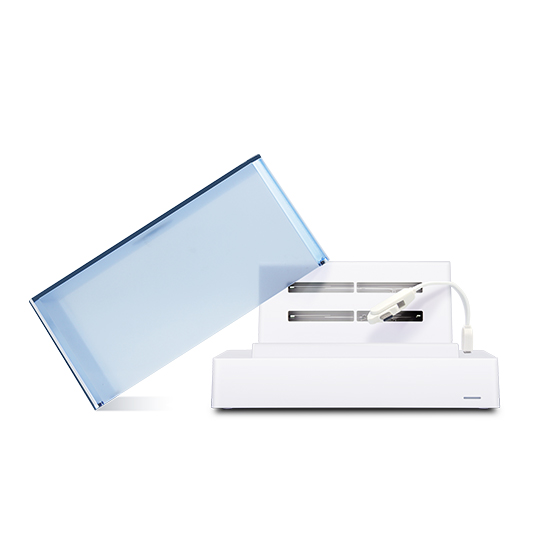
The development of application-specific UV disinfectors and specialty disinfection equipment is often reduced to a simple specification exercise—select a wavelength, assign a power level, and define a cycle time. In practice, this simplification rarely survives contact with real product geometry and mass production variability—select a wavelength, assign a power level, and define a cycle time. In ...

In the previous article, we discussed “perceptible differentiation,” meaning product advantages that users can directly experience—from CMF, to high-frequency interaction details, to optimization of core performance efficiency. Together, these factors determine whether a product is “worth choosing.” However, in the real competitive environment of the appliance industry, being chosen alone does not...

In our previous blog, Feature Stacking and Product Differentiation: Practical Judgement from an ODM Manufacturer, we discussed a common phenomenon in the appliance industry: when competition becomes highly homogenized, many teams instinctively choose to “add more”—higher specs, denser feature sets, and more complex configuration combinations. However, in real-world product development and mass pro...

In today’s highly mature consumer electronics and small appliance markets, product homogenization has become a common reality for global brands and sourcing teams. Whether in North America, Europe, or markets dominated by cross-border e-commerce and channel brands, convergence in industrial design, core feature sets, and price positioning is increasingly evident. Across many categories, products f...

In the global supply chain for electrical and electronic products, the journey from concept to mass production is, by nature, a continuous engineering loop of validation and correction. As a professional ODM/OEM manufacturer specialising in disinfection and cleaning appliances, ATYOU Health Tech understands that a mature product is not defined merely by “functional completion,” but by hundreds—oft...

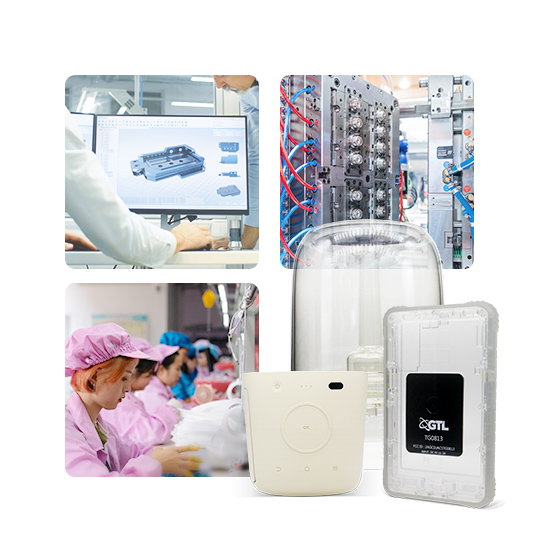
In any customised small appliance or electronic product development project that starts from scratch, the journey from industrial design drafts to final mass production is never a straight, smooth path. Instead, it is a structured process built on multiple rounds of prototype iterations and stringent validation. Whether it is an ODM project or an OEM development from ID to mass production, EVT, DV...

From an initial concept to a mass-producible product, prototype verification is one of the most critical and technically intensive stages in any home appliance development process. It serves as both the “reality check” for design concepts and the first gate for assessing mass-production feasibility. For brand owners, prototype verification determines whether a product is worth further investment; ...
 No. 1-A, Kechuang Center, No. 289 Wengjiao Rd., Haicang Dist., Xiamen, 361000, Fujian, China
 (86)0592-5626338
Subscribe to our newsletter
Our parent company

Xiamen Qiqiangsheng Moulds Co., Ltd.
Copyright © 2012-2026 Xiamen Atyou Health Technology Co., Ltd. All Rights Reserved.

 English
 español