Categories
New Blog
Perceptible Differentiation: Reframing “Effective Product Differentiation” from a User Experience Perspective
In our previous blog, Feature Stacking and
Product Differentiation: Practical Judgement from an ODM Manufacturer, we
discussed a common phenomenon in the appliance industry: when competition
becomes highly homogenized, many teams instinctively choose to “add more”—higher specs, denser feature sets,
and more complex configuration combinations. However, in real-world product
development and mass production, blind feature stacking rarely creates a true
moat. Instead, it often leads to cost overruns, increased system complexity,
fragmented user experience, higher certification and supply chain risks, and
greater after-sales uncertainty. For brands operating in global markets, these
risks ultimately manifest as unreliable delivery, damaged channel reputation, higher
return rates, and even compliance delays.
If simple “feature
addition” is not the solution, the question returns to
the essence of the product: in a highly competitive appliance market, what
constitutes good, effective differentiation? As an professional health appliances ODM specializing in
sterilization and cleaning appliances—serving
overseas brands with integrated capabilities in industrial design, mechanical engineering,
electronics, embedded software, validation, supply chain, and mass production—we tend to frame this from an engineering perspective. Effective
differentiation is the alignment of “highly perceptible
user experience” and “highly
executable manufacturing”: something users can
immediately perceive, and channels can clearly communicate. At the same time,
factories can produce consistently at scale with controlled cost and lead time.
This article first focuses on perceptible
differentiation—why users choose your product.
Perceptible Differentiation: The
Explicit Competitiveness of User Experience
From the perspective of the home appliance
industry, product differentiation must first be grounded in “perceptibility.” This does not simply mean “looking different” or “having more features,” but rather delivering
clear and consistent experiential advantages that users can recognize within
the first minute of contact, during the first interaction, and throughout
frequent daily use.
For brand teams, perceptible
differentiation determines whether a product gets purchased. For product
managers, it determines whether selling points are real and verifiable. For
supply chain leaders, it determines whether these experiences can be consistently
reproduced in mass production, rather than existing only in prototypes or pilot
runs. To make perceptible differentiation robust, brands and capable full-stack
ODM partners typically need to define experience targets, metric boundaries,
and implementation paths early on—rather than operating
in silos during development and production.
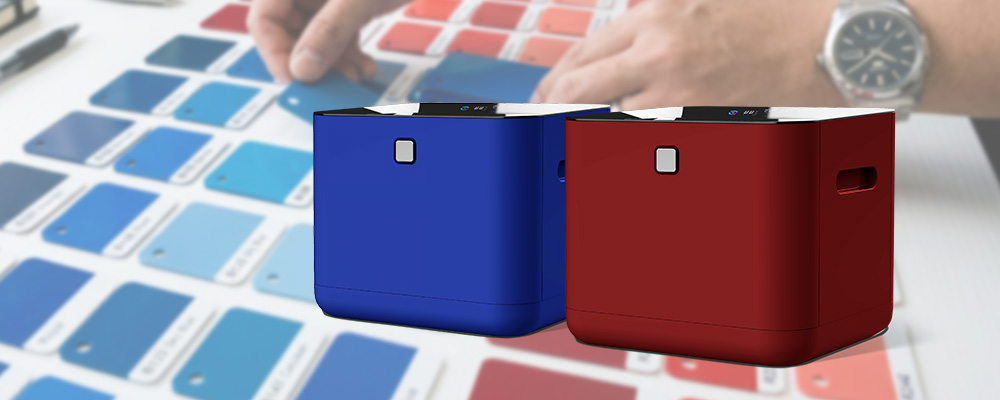
CMF Engineering: Translating “Premium Feel” into Mass Production Standards
CMF (Color/Material/Finish) is often one of
the most cost-effective levers for perceptible differentiation, as it directly
shapes the “first-impression premium feel.”
• Visual: including color consistency,
gloss level, light transmission and reflection characteristics, texture
refinement, and gap/flush alignment at joints;
• Tactile: including surface friction
coefficient, warmth of touch, resistance to oil and fingerprints, and edge
comfort.
A key point is that many CMF differences do
not require entirely new processes. More often, they depend on systematic
decisions across material systems, surface finishing routes, mold texturing,
supplier process capability, and inspection standards. Appliance ODMs with
mature CMF engineering validation and mass production experience can more
precisely support early-stage development, translating “design language” into “repeatable process windows.”
For example, for home UVC air purifiers or premium kitchen appliances placed in visible areas, large white or matte
surfaces tend to expose sink marks and flow lines. An experienced ODM can
mitigate these issues through mold texture selection to mask injection defects,
or by balancing anti-yellowing performance and toughness in plastic material
selection, while proactively addressing structural and assembly details that
could amplify gap and flush inconsistencies. This level of consistency often
builds brand perception more effectively than more exaggerated styling.
Human-Machine Interaction and Structural
Design: Subtle Details Define “Professional Feel”
Optimizing human-machine interaction and
structural details is another often underestimated yet high-return form of
perceptible differentiation. Many brands, when benchmarking competitors, focus
on specifications and core features, but real user experience is often
determined by details.
For example, whether the grip of a handheld
cleaning device conforms to hand ergonomics, whether the center of gravity
feels balanced, and whether prolonged use leads to fatigue; whether the door of
a countertop UV sterilizer opens and closes with damped resistance instead of
producing a cheap collision sound; whether button travel and tactile feedback
are crisp. These details are especially critical for high-frequency-use
products such as cleaning appliances, where interaction quality directly
influences users’ perception of professionalism and
reliability.
Importantly, such differentiation usually
does not significantly increase BOM cost, but it places higher demands on
structural design, tolerance stack-up, material selection, mold precision,
assembly processes, and testing methodologies. A professional R&D team and
appliance ODM manufacturer can quantify these subjective metrics during the
design phase, preventing inconsistency issues after mass production.
Performance Experience Optimization:
Improve Efficiency, Not Feature Count
The third type of perceptible
differentiation is “functional experience optimization.” The key, however, is not adding more features. Instead, while
keeping the core functionality unchanged, it focuses on delivering a clearly
noticeable improvement in efficiency—results that users
can see and feel: more effective, faster, quieter, more stable, and more
hassle-free.
For example, in UV drying sterilizers,
optimizing airflow structure and thermal management strategies can reduce
drying time from one hour to 30 minutes, creating a clearly noticeable
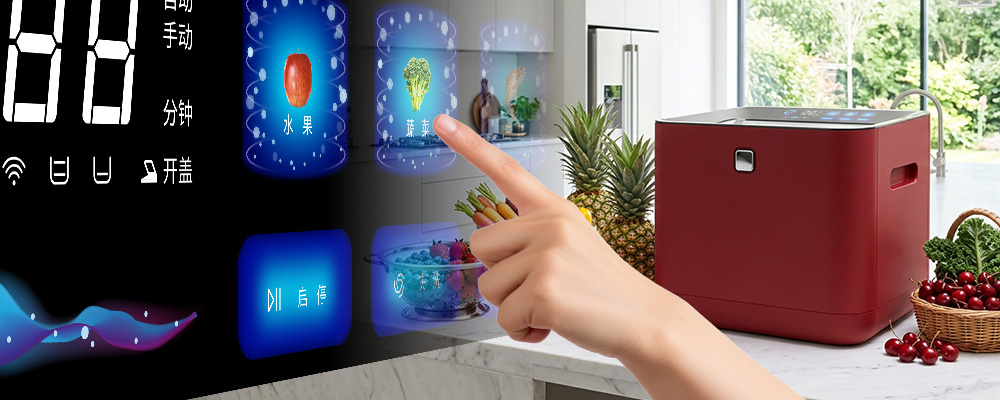
improvement. In fruit and vegetable cleaning devices, system-level noise
reduction can lower operating noise from a disruptive level to one close to
ambient background noise. These efficiency-focused improvements around core
functions are typically more persuasive in the market than feature stacking.
It should be emphasized that such
optimization must be built on close coordination between R&D and
manufacturing: component matching, thermal path design, control strategies
aligned with tolerance variation, and consistency control in mass production.
The core value of an R&D-driven ODM lies in converting “experience advantages” into “engineering-controlled parameters.”
From CMF to structural details to core
performance optimization, perceptible differentiation fundamentally answers one
question: why users choose you. Based on the experience of the ATYOU Health
Tech team in developing successful products for many globally recognized
brands, this type of differentiation consistently outperforms feature-stacking
approaches in the market.
However, in real business environments,
being “chosen” is not enough. Many products demonstrate excellent experience at
the prototype stage, yet suffer from quality variation, delivery delays, or
cost overruns after scaling, ultimately weakening market performance.
Therefore, truly effective differentiation must also answer a second question:
can these experiences be produced consistently and sustainably at scale? This
will be addressed in the next article from a manufacturing and supply chain
perspective.
 No. 1-A, Kechuang Center, No. 289 Wengjiao Rd., Haicang Dist., Xiamen, 361000, Fujian, China
 (86)0592-5626338
Subscribe to our newsletter
Our parent company

Xiamen Qiqiangsheng Moulds Co., Ltd.
Copyright © 2012-2026 Xiamen Atyou Health Technology Co., Ltd. All Rights Reserved.

 English
 español