Categories
New Blog
UVC Disinfection 101 for Product Developers: Wavelength, Dose, Shadowing, and Material Aging
The development of application-specific
UV disinfectors and specialty disinfection equipment is often reduced to a
simple specification exercise—select a wavelength,
assign a power level, and define a cycle time. In practice, this simplification
rarely survives contact with real product geometry and mass production
variability—select a wavelength, assign a power level,
and define a cycle time. In practice, this simplification rarely survives
contact with real product geometry and mass production variability. The actual
disinfection performance is governed by how optical energy is distributed in
space, how consistently that distribution is reproduced in manufacturing, and
how the system behaves over time as materials and components age.
From wavelength to dose: why optical
output is not the same as disinfection performance
UVC systems used in product applications
typically operate in the 200–280nm range, with 254nm
(low-pressure mercury lamps) and 265–280nm (UVC LEDs)
being the dominant choices. The biological mechanism is well established: UVC
radiation damages microbial DNA and RNA, preventing replication.
However, this mechanism only becomes
relevant when sufficient energy reaches the target surface. What ultimately
determines efficacy is the dose, usually expressed as mJ/cm², which is the integral of irradiance over time. This distinction is
critical in product engineering. LED electrical power or optical rating
describes the source, not the energy delivered at the object's surface.
Once light enters a confined enclosure,
several loss mechanisms immediately appear. Geometric spreading reduces
intensity with distance. Reflection from internal walls is never fully
efficient in the UVC spectrum. Plastics, coatings, and even air absorption
introduce additional attenuation. As a result, the “nominal
output” of a UVC module and the “effective dose map” inside a product chamber
often diverge significantly.
For this reason, functional validation
cannot rely on point measurements or single-location sensor readings. What
matters is the spatial dose distribution across the full usable volume of the
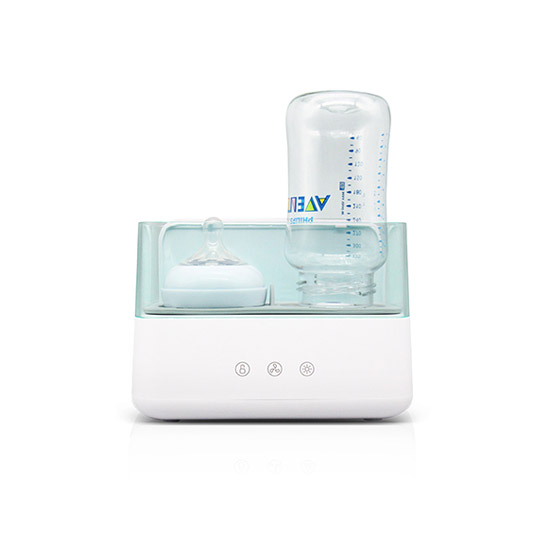
chamber. In compact products such as bottle sterilizers or portable
disinfection boxes, small changes in LED placement or cavity dimensions can
shift this distribution enough to affect real-world performance.

Shadowing and optical geometry: the
dominant failure mode in real usage conditions
If dose defines theoretical capability,
shadowing defines practical limitations. UVC radiation travels in straight
lines and does not penetrate opaque or even semi-opaque materials, nor even
most visually transparent polymers and standard glass. Any obstruction between
the emitter and the target surface creates a region of reduced or zero
exposure.
In real product scenarios, objects are
rarely simple or planar. Toothbrush heads, bottle threads, silicone folds,
stacked utensils, or irregularly arranged items introduce complex occlusion
patterns. These structures generate persistent shadow zones that cannot be
compensated for by simply increasing LED power or extending cycle time.
This is why many UVC products demonstrate
acceptable results in controlled lab tests but underperform in user conditions.
Laboratory setups often assume ideal positioning and uniform exposure, whereas
real usage introduces uncontrolled orientation and self-shadowing. In many
cases, shadowing contributes more to sterilization inconsistency than any
limitation in LED output.
Mitigating this effect requires treating
optical design and mechanical structure as a single system. Reflective cavity
geometry is commonly used to redistribute photons and partially recover
shadowed regions. Materials such as polished aluminum or UV-stable reflective
coatings are used to increase internal reflection efficiency. However, in the
UVC range, reflectivity is highly sensitive to surface quality and degrades
with contamination and aging, which means optical performance is not static
over product life.
Emitter configuration is equally important.
Multi-angle LED arrangements, ring geometries, or distributed top-and-bottom
layouts are typically used to reduce directional dependency. The goal is not
simply to increase light intensity but to flatten the spatial dose field. From
a manufacturing perspective, this introduces additional constraints: small
deviations in LED angle, PCB positioning, or assembly tolerance can translate
into measurable changes in dose uniformity.
Material aging and system consistency:
constraints that emerge after design validation
Unlike visible light systems, UVC products
operate in a regime where material stability becomes part of the optical
system. Many polymers commonly used in housings and internal fixtures—such as PC, ABS, and certain elastomers—undergo
photochemical degradation under prolonged UVC exposure. This typically
manifests as yellowing, embrittlement, or surface microcracking.
The impact is not limited to appearance.
Material aging alters surface reflectivity, which directly affects internal
optical behavior. In reflective cavities, even small changes in surface
condition can reduce photon recycling efficiency and shift dose distribution
over time. Structural deformation caused by embrittlement can further affect
the alignment of optical components.
From a production standpoint, consistency
challenges are rarely caused by a single dominant factor. Instead, they arise
from the accumulation of tolerances across multiple domains: LED bin variation,
thermal drift affecting optical output, mechanical alignment during assembly,
and variability in reflective surface finishing. Each factor alone may be
within acceptable limits, but their combination determines whether units remain
within performance tolerance bands.
This is why robust custom UVC devices contract
manufacturing requires system-level validation rather than isolated
component testing. Meeting these benchmarks demands advanced UVC hardware
engineering, where optical measurement across multiple units, across multiple
production batches, and under different thermal and aging conditions is
implemented to establish real performance boundaries.
In practical terms, successful UVC product design is less about maximizing irradiance and more about controlling distribution stability over time and across manufacturing variance. When dose uniformity, shadow mitigation, and material stability are addressed as a coupled system, UVC disinfection moves from a theoretical capability to a repeatable engineering feature suitable for scalable production. To benchmark your optical geometry and explore turnkey solutions for custom UVC sterilizers, consult our bespoke sanitization system development team at www.atyouhealth.com.
 No. 1-A, Kechuang Center, No. 289 Wengjiao Rd., Haicang Dist., Xiamen, 361000, Fujian, China
 (86)0592-5626338
Subscribe to our newsletter
Our parent company

Xiamen Qiqiangsheng Moulds Co., Ltd.
Copyright © 2012-2026 Xiamen Atyou Health Technology Co., Ltd. All Rights Reserved.

 English
 español